Whop Neobank BlueprintWhat It Includes, How It Earns, and What to Check Before You Build

By Santosh Kumar, Founder of Shopiator
Whop's Neobank blueprint gives platforms branded balances, virtual cards, and payouts. What it includes, how it earns, and what to verify.
On September 25, 2026, Whop posted that you can create your own neobank in 15 minutes, and the post passed 1.4 million views. Whop published a blueprint and a blog post the next day. The idea is simple: if your platform already moves money, someone else earns on that flow. Here is what the Neobank blueprint includes, how it earns, and the questions to ask before you build on it.
What Is Included
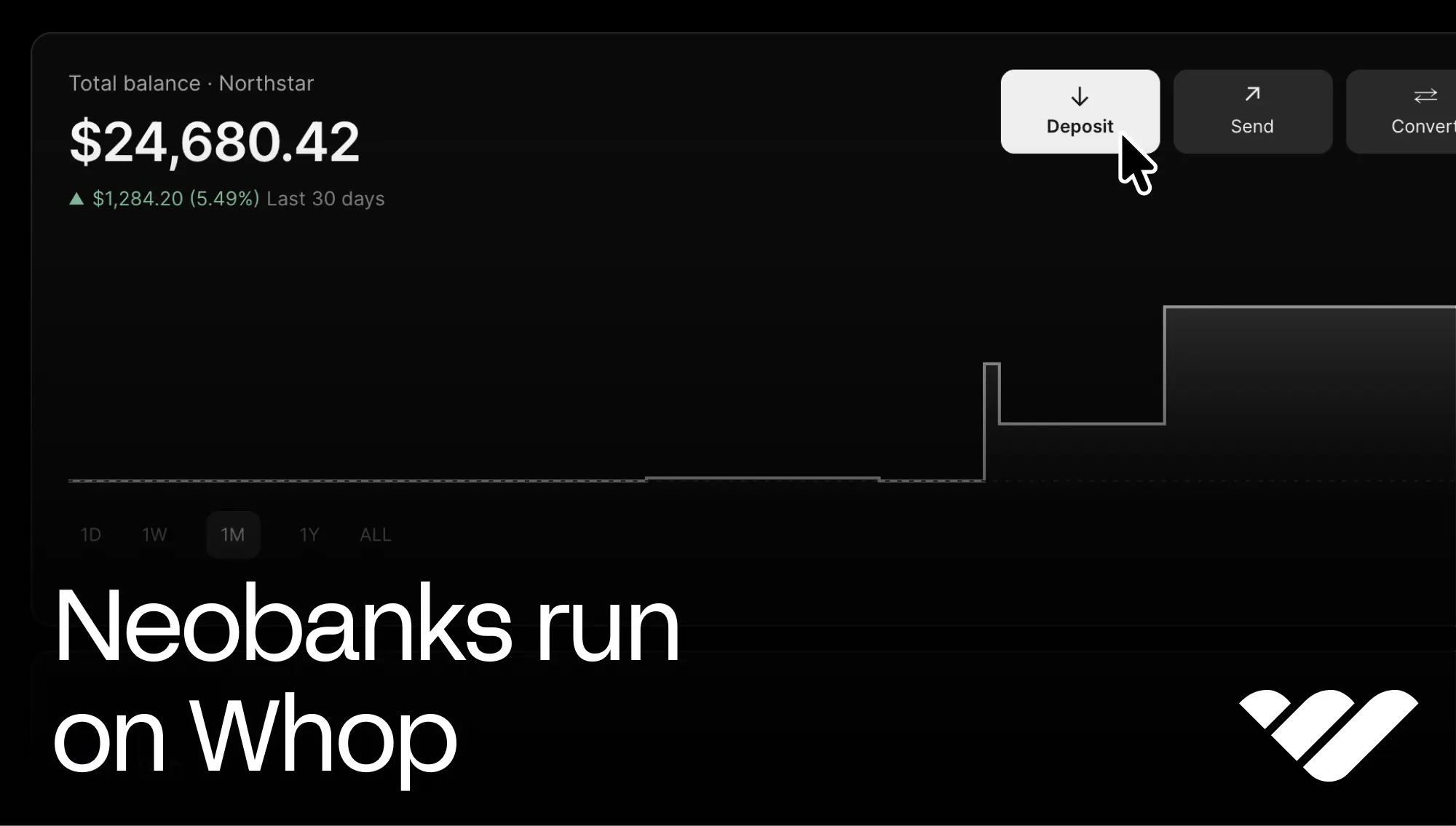
Whop describes every neobank as doing four jobs: accept payments, hold a balance, issue cards, and pay out. Each of those is a public Whop API endpoint, and the blueprint connects them with Whop Elements, drop-in interface components. Each of your users becomes a sub-account of your business on Whop. If you want a card for your own Whop business instead, here is who can get one and where.
| Feature | What users can do |
|---|---|
| Balance | Hold money in fiat and stablecoin |
| Deposits | Add money by bank transfer or crypto on-ramp, on 11 chains in around 20 tokens including USDC, USDT, and PYUSD |
| Invoicing | Get paid with an invoice or checkout link that lands in their balance |
| Transfers | Send money to anyone else on your neobank |
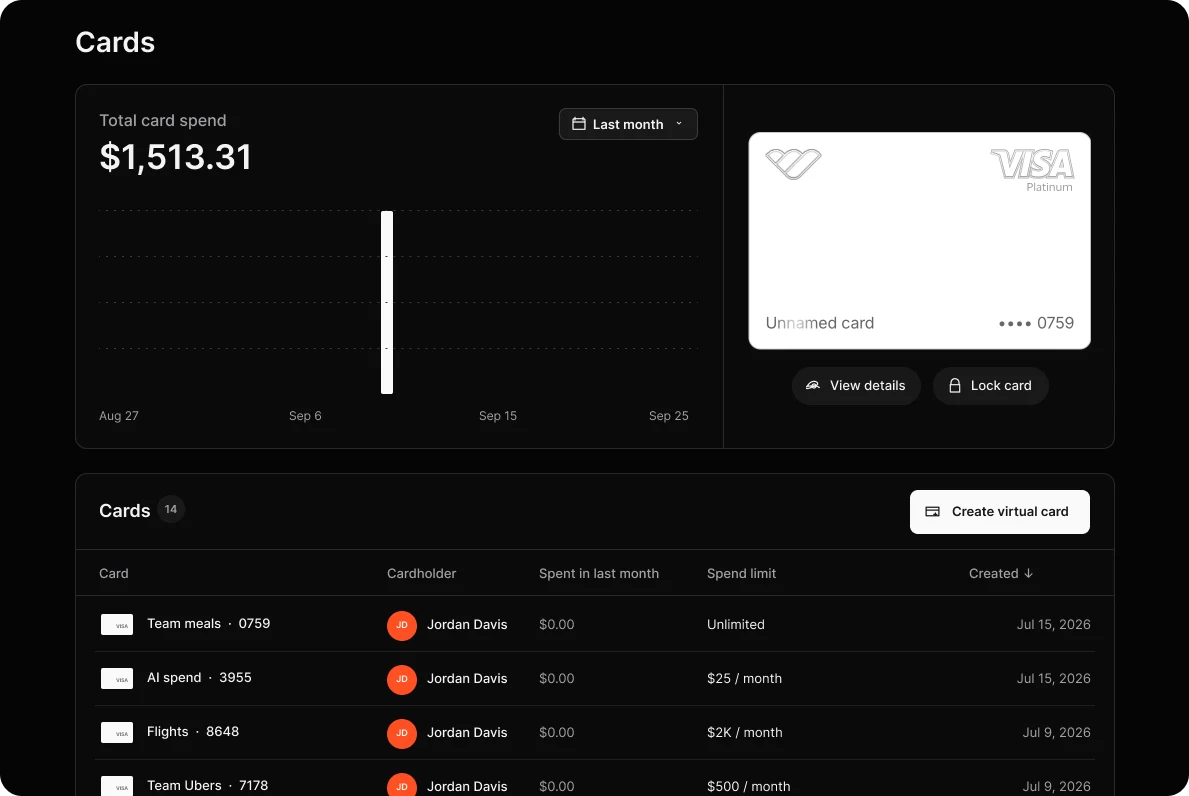
| Cards | Spend with a virtual card, with limits you set; freeze or cancel any time |
| Withdrawals | Send money to a linked bank account or crypto wallet |
| Swaps | Convert between currencies, stablecoins, or assets like BTC and gold |
| KYC | Verify identity in a drop-in step inside your site |
Source: Whop's Neobank blueprint announcement, September 26, 2026.
How a Neobank on Whop Earns
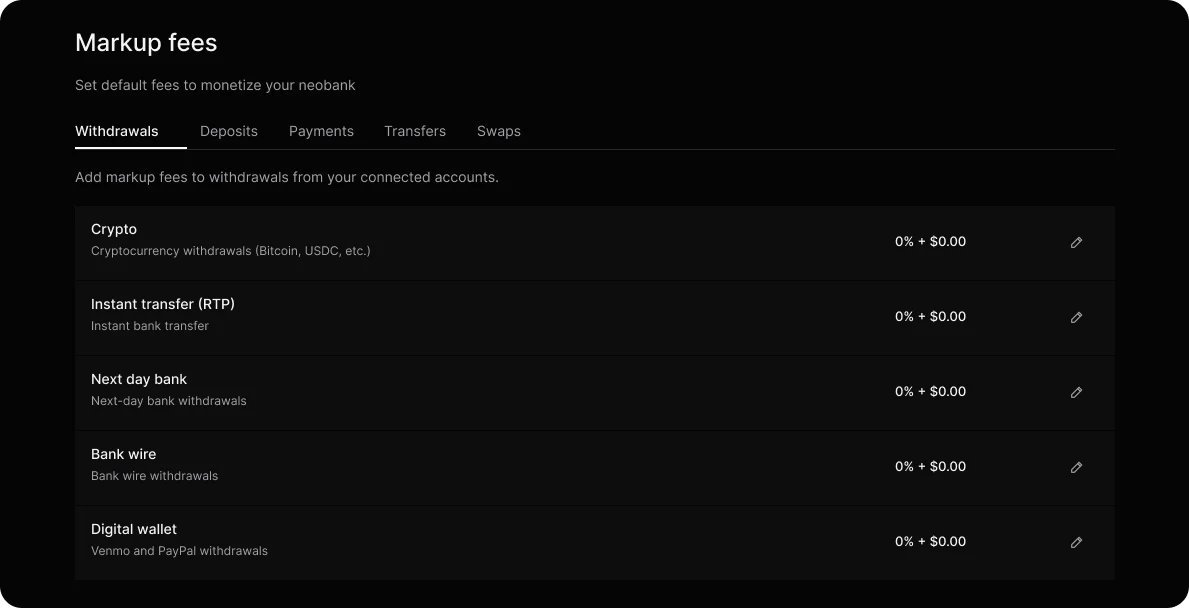
Whop charges a base fee when money moves, and you decide what your users pay on top. The difference is your revenue. You can set a different markup for deposits, payments, transfers, swaps, withdrawals, and card spend, and every fee shows in the activity feed for you and your users. Whop's own example: a platform paying 2,000 sellers a month that adds $1 to each transfer earns $2,000 a month. You can also fund cashback rules from your own balance, such as 5% back on purchases from your own store.
Who Might Use It
- ▶Marketplaces and platforms that collect from buyers and pay out sellers, and want sellers to hold a balance instead of waiting on an outside bank.
- ▶Creator and community businesses with an audience that moves money and would use a branded account.
- ▶Agencies and services platforms paying contractors, who could pay out inside their own product.
For a typical single-brand ecommerce store, it is the wrong tool. A store that sells its own products has no payouts to capture.
What to Check Before You Build
- ▶Regulation: holding balances and issuing cards for users is regulated in most countries. Whop says it has the banking and card relationships, but confirm who is the licensed party and what your own obligations are, and take legal advice.
- ▶Base fees: the announcement does not publish Whop's base fee on each movement, so you cannot compute margin until you see it.
- ▶Whose money it is: ask what happens to user balances if you shut down or if Whop changes terms.
- ▶Fraud and chargebacks: who bears the loss on a stolen card or a disputed deposit.
- ▶Crypto and swaps: gold, BTC, and stablecoin features add tax and compliance questions for your users.
For context on Whop's core payments product and its fees, see Whop for ecom operators and ecom payment processing on Whop. Other new Whop launches we covered: Economic Intelligence and Whop ecommerce stores vs Shopify.
New to Whop or still deciding? Start with why Whop: what it does, what it costs, and who should skip it.
Start a Whop and explore its blueprints.
Try WhopFrequently Asked Questions
What is the Whop Neobank blueprint?
A ready-made Whop website that combines payments, balances, virtual cards, and payouts so a platform can offer branded money accounts to its users.
How long does it take to launch a neobank on Whop?
Whop says about 15 minutes to deploy the blueprint. Launching a compliant product with real users will take longer.
How does a Whop neobank make money?
Whop charges a base fee when money moves and you add your own markup on deposits, payments, transfers, swaps, and card spend. The difference is your revenue.
Is it regulated?
Holding balances and issuing cards is regulated in most places. Whop says it provides the banking and card relationships, but confirm licensing and your obligations with a lawyer.
P.S. The Operator Audit is a full manual review of your account: 10 recommendation sets, a live findings call and a prioritized action plan. The $1,299 comes off your first month if you hire us within 30 days. Get the Operator Audit
Disclosure: Shopiator has an affiliate link for Whop and may earn a commission if you sign up through it, at no extra cost to you. We do not operate, control or guarantee any provider or tool mentioned here, so do your own due diligence.
Keep reading
Whop Economic Intelligence: What It Does and What the Data Shows
Whop's Economic Intelligence recommends your next best action and runs it. What it does, the 31.8% sales growth claim, and how to test it.
ReadGuideWhop Ecommerce Stores vs Shopify: What Whop Just Launched
Whop now supports ecommerce stores. What the October 1, 2026 announcement shows, how it compares with Shopify, and how to test it safely.
ReadGuideNotch AI Review: Can Ecom Brands Replace a Meta Media Buyer?
Can ecom brands replace their Meta ads media buyer with Notch AI? An operator's analysis of what it does, its 3.8x ROAS and 50,000-ad claims, pricing, and what to verify before you buy.
Read