Whop Ecommerce Stores vs ShopifyWhat Whop's New Store Feature Shows, and What Is Still Unknown

By Santosh Kumar, Founder of Shopiator
Whop now supports ecommerce stores. What the October 1, 2026 announcement shows, how it compares with Shopify, and how to test it safely.
On October 1, 2026, Whop posted on X that it "now supports ecommerce stores end-to-end," with a link to a demo merchandise store. The post passed 155,000 views within days. For anyone who sells physical products on Shopify, the question is whether this is a real alternative or a payments tool with a storefront bolted on. Here is what Whop has shown, what it has not, and how to test it. For the partner-program side of the Shopify comparison, see Is Whop Becoming the Shopify of Online Business?.
What Whop Announced
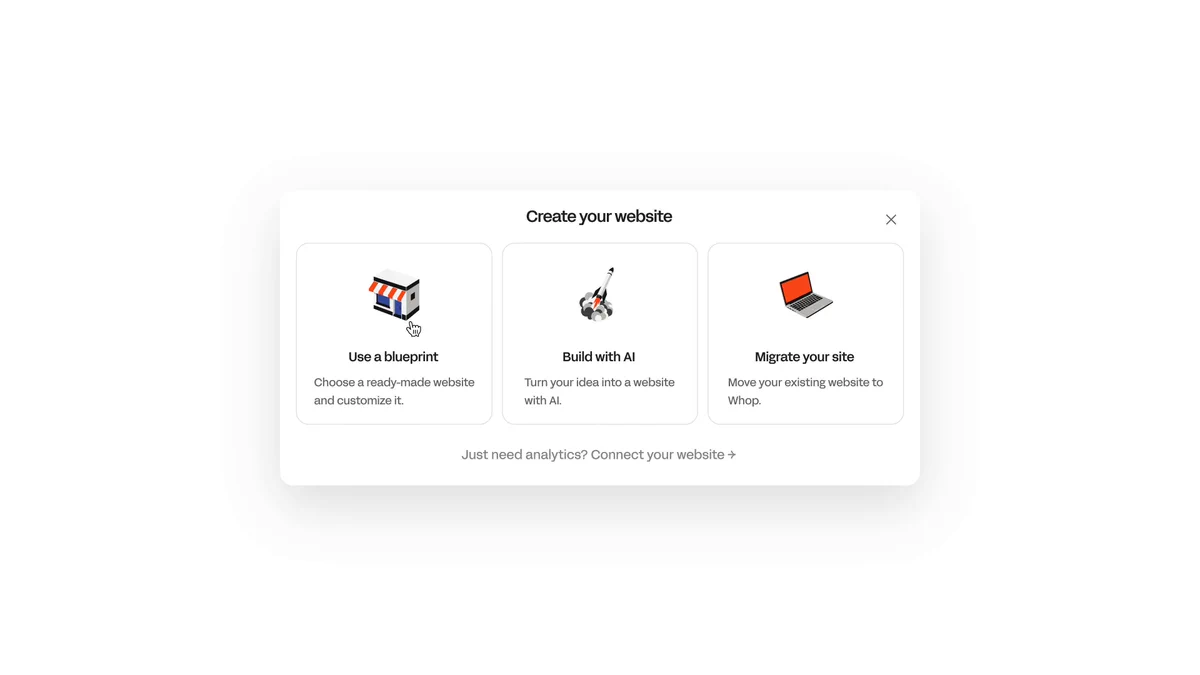
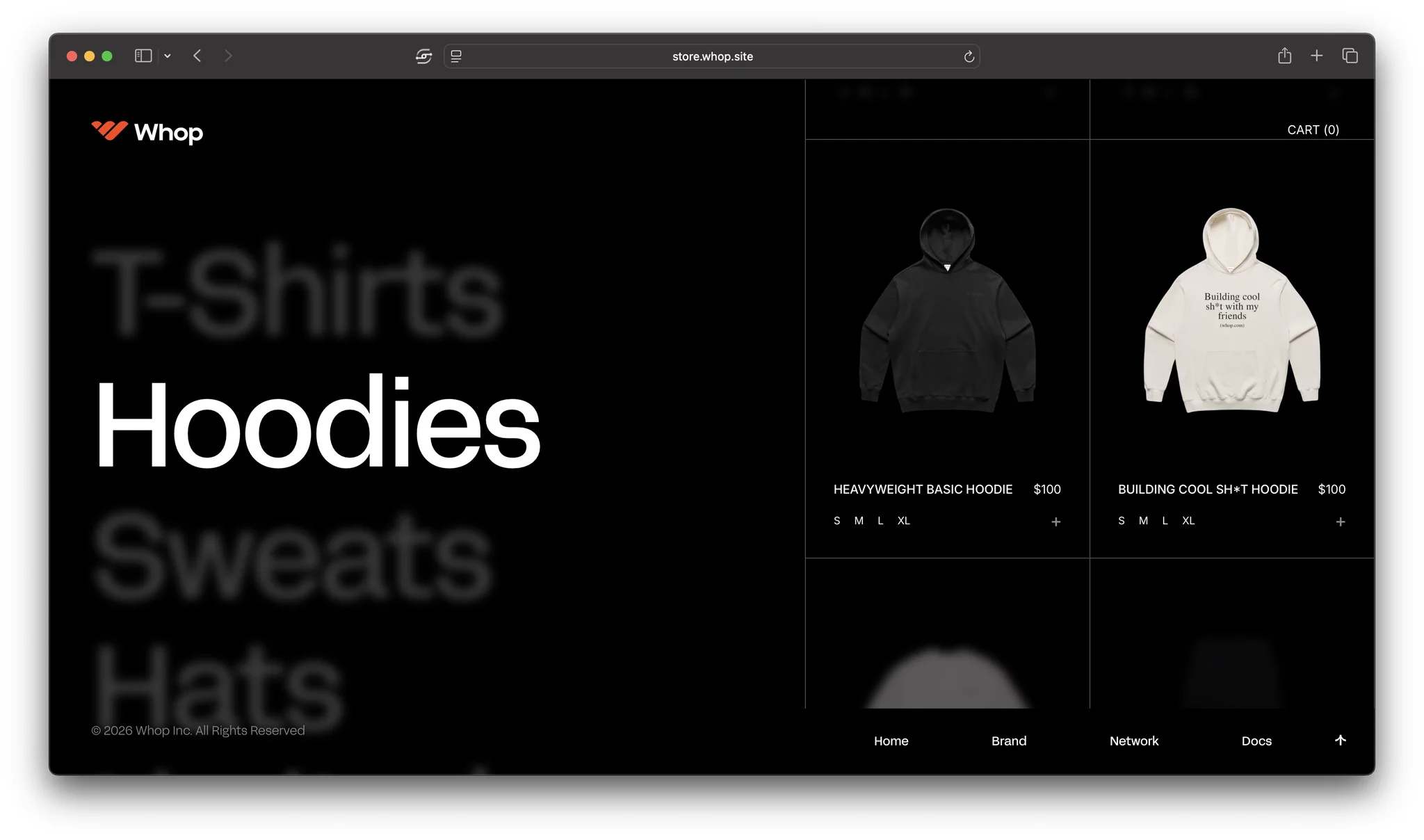
Whop's announcement is one line and a demo. The demo, store.whop.site, is a black-and-white merchandise store with categories for T-shirts, hoodies, sweats, hats, and limited items, a size selector on each product, a cart, and prices from $40 to $130. The setup screen Whop shared offers three starting points: use a blueprint (a ready-made website you customize), build with AI (turn an idea into a website), or migrate your existing website to Whop. It also offers a way to connect an existing site for analytics only.
What Whop Already Did for Ecommerce
Before this announcement, Whop's docs described selling physical products as a four-step flow: create a product, set a one-time or recurring price, set up fulfillment, and share the checkout link. Fulfillment was handled by webhooks through Zapier, with custom fields on the pricing option to collect shipping address, size, and color. The same page said Whop was still improving support for physical products. That is a payments and checkout layer, not a store platform. We covered the earlier setup in Whop for ecom operators and its fees and payouts.
Whop vs Shopify: What Is Still Unknown
| Capability | Shopify | Whop (what is shown) |
|---|---|---|
| Storefront themes and builder | Mature theme and app ecosystem | Blueprints, AI builder, migration option |
| Shipping rates and labels | Built in, plus carrier apps | Not shown; docs describe Zapier webhooks |
| Taxes and VAT | Built in tax tools | Not shown |
| Inventory and variants | Built in | Size selector in the demo; inventory not shown |
| Apps for reviews, email, upsells | Thousands of apps | Not shown |
| Ad platform integrations | Google and Meta channels, feeds | Not shown |
| Checkout | Shop Pay and native checkout | Whop checkout, community and chat features |
Shopiator comparison from Whop's October 1, 2026 announcement and public docs. Shopify column reflects standard Shopify features; confirm current plans.
The last two rows matter most for paid ads. Google Shopping and Performance Max need a clean product feed and conversion tracking, and Meta needs a working pixel and catalog. If Whop does not give you both, you can still run ads to product links, but you lose the feed-based channels that carry most ecommerce Google spend. Check this before you move a store that depends on Shopping. For the cost math and the case for switching, see should your ecommerce brand switch to Whop.
Who Should Test It
- ▶Creators and communities selling merch: you already have an audience on Whop, and a storefront in the same place is a natural fit.
- ▶Small catalogs and drops: a handful of products with simple shipping can live without a deep app ecosystem.
- ▶Digital plus physical bundles: Whop's core strength is access, memberships, and checkout, which pairs well with a physical add-on.
Who Should Wait
- ▶Stores with Google Shopping or Performance Max as a main channel, until feed and tracking support is confirmed.
- ▶Stores with large catalogs, many variants, or complex shipping and tax rules.
- ▶Anyone with a working Shopify store and healthy margins. Migration risks SEO, tracking, and ad history for an unproven benefit.
How to Test It Without Risk
- ▶Launch a new product line or a small drop on Whop and leave the main store alone.
- ▶Test a real order end to end: checkout, tax, shipping, a refund, and a customer email.
- ▶Confirm the fee at your average order value, including payment processing, and compare against your Shopify plan plus payments.
- ▶Check whether you can export a product feed and install ad tracking before you send paid traffic.
If Google Ads is part of your plan, our guides to Google Ads versus Meta Ads and feeder and converter Shopping architecture explain what a store needs in place to run Shopping profitably.
New to Whop or still deciding? Start with why Whop: what it does, what it costs, and who should skip it.
Start a Whop and test its ecommerce store features.
Try WhopFrequently Asked Questions
What did Whop announce for ecommerce?
On October 1, 2026, Whop said it now supports ecommerce stores end-to-end, with a demo merch store at store.whop.site and a site setup flow offering blueprints, an AI builder, and site migration.
Is Whop a Shopify alternative?
It may become one for small catalogs and creator merch, but Whop has not published details on shipping, taxes, inventory, or ad channel integrations that we could verify. Test it on a new product line first.
How much does selling on Whop cost?
Whop's published fee schedule has no monthly platform fee and charges per transaction. Check the current rate on Whop's fee page, because fees change.
Can I run Google Shopping from a Whop store?
Unconfirmed. Google Shopping needs a product feed and conversion tracking, and Whop has not shown either for its new stores. Verify both before you send paid traffic.
P.S. The Operator Audit is a full manual review of your account: 10 recommendation sets, a live findings call and a prioritized action plan. The $1,299 comes off your first month if you hire us within 30 days. Get the Operator Audit
Disclosure: Shopiator has an affiliate link for Whop and may earn a commission if you sign up through it, at no extra cost to you. We do not operate, control or guarantee any provider or tool mentioned here, so do your own due diligence.
Keep reading
Notch AI Review: Can Ecom Brands Replace a Meta Media Buyer?
Can ecom brands replace their Meta ads media buyer with Notch AI? An operator's analysis of what it does, its 3.8x ROAS and 50,000-ad claims, pricing, and what to verify before you buy.
ReadGuideAre Dropshipping Courses Worth It? 46 Whop Listings Checked
Are dropshipping courses worth it? We checked the public evidence on 46 Whop listings: only 11 have 50 or more reviews, prices run from $10 a week to $25,000, and the one-star reviews show refused refunds and lost access. Here are the checks to run before you pay.
ReadRankingBest Cheap Dropshipping Courses (2026): $50 a Month or Less
Eight dropshipping programs on Whop at $50 a month or less, with public ratings, review counts, and downsides: from $9 a month to Rippy Club's free tier.
Read